


Give your handmade paper aircraft real electric power. Attach the module, pick up the 2.4G controller, and enjoy guiding your own creation through the air.
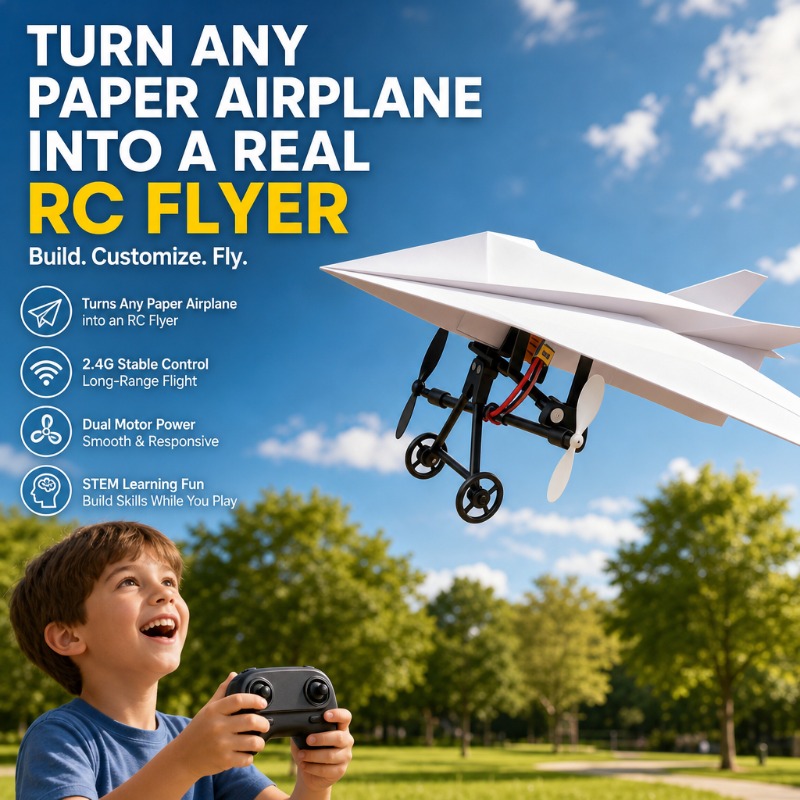
Turn Any Paper Airplane into a Remote-Control Flyer
Endless DIY Creativity
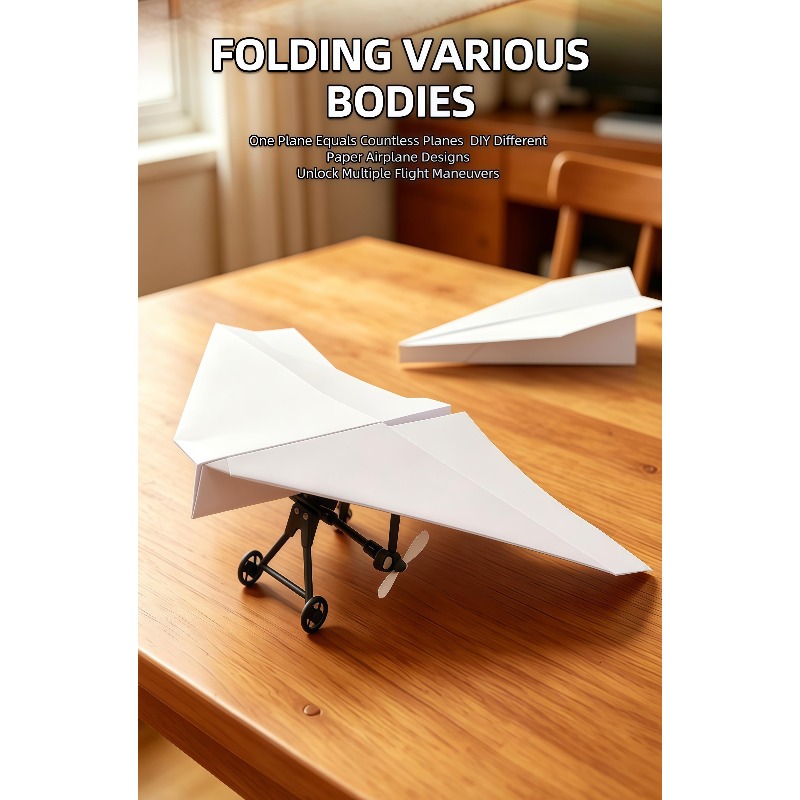
Its smart clip-on construction fits many different paper airplane designs. Try everything from streamlined darts to broad gliders, then compare how each shape performs with powered flight. Every new fold brings a fresh challenge.
Clip-on Design
Universal Fit
Creative Play
Precision Twin-Prop Control
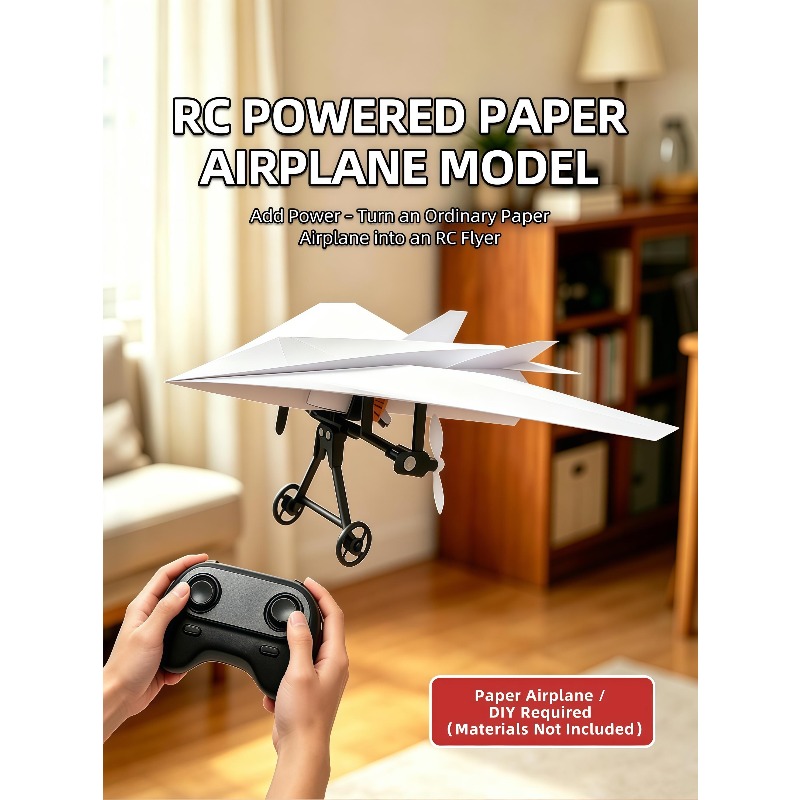
Two motors deliver propulsion while also supporting steering. With the included 2.4G remote, you receive steady, long-distance control for turns, climbs, and gentle gliding outdoors or across spacious indoor areas.
Twin Motors
2.4G Remote
Stable Flight
Learn Science Through Play
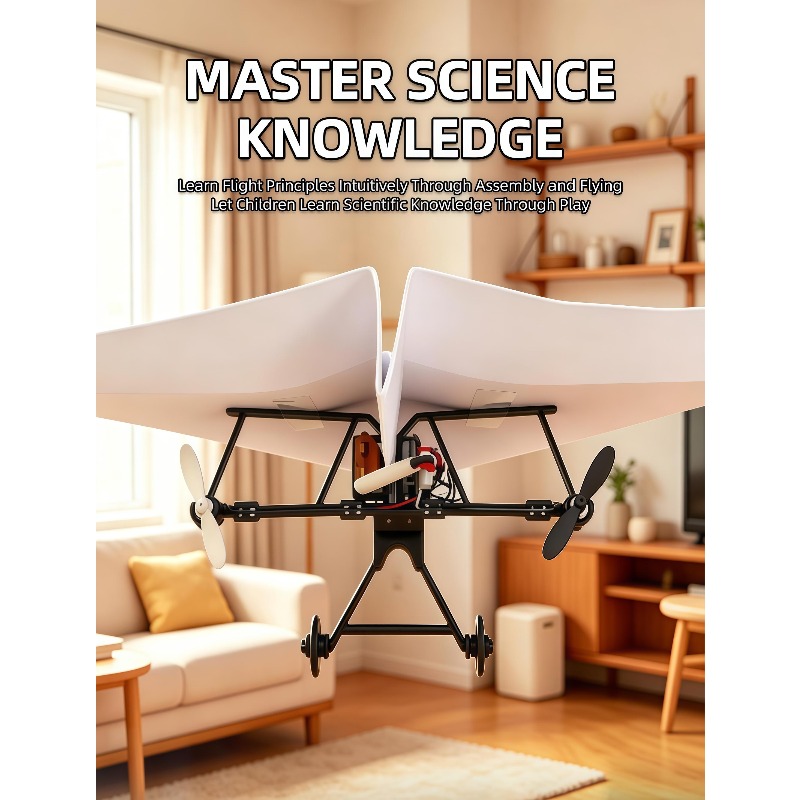
Make play a practical STEM activity. As children assemble, fine-tune, and pilot their own aircraft, they naturally explore aerodynamics, balance, and introductory electronics. The result is learning that feels like fun.
STEM Learning
Aerodynamics
Hands-on
Product Specifications
| Product Type | DIY RC Paper Airplane Power Kit |
|---|---|
| Module Dimensions | Approx. 4.33 in (Width) x 2.76 in (Length) |
| Control Frequency | 2.4 GHz |
| Materials | ABS Plastic, Electronic Components |
| Remote Battery | Requires 3 x AAA Batteries (Not Included) |
| Recommended Paper | A4 Size, 80-100 gsm |
| What's in the Box | Power Module, Landing Gear, Remote Controller, Rechargeable Battery (for module), USB Charging Cable, Screwdriver, Spare Propeller Set |
Frequently Asked Questions
What kind of paper works best?
Standard A4 printer paper weighing around 80-100 gsm is the recommended choice. Cardstock with greater weight can place too much load on the motors, whereas extremely thin sheets may lack sufficient strength.
Where is the best place to fly my RC paper plane?
Choose a broad, wind-free location for flying, including a large backyard, park, or gymnasium. Stay away from trees, buildings, and power lines.
How do I control the plane's direction?
The controller operates through differential thrust. When you move the steering stick, it adjusts the left and right propeller speeds separately, making the aircraft turn in either direction.